
Welcome to The New Leader, where I write without a filter about leadership, the broken hiring system, career reinvention, and what it actually costs to keep showing up.
I write about the part nobody briefs you on. The politics, the tradeoffs, the things leaders don't say out loud. Leadership isn't a gift or a title. It's just people trying to figure it out and not quitting when it gets hard.
That's the new leader. And it's all of us.




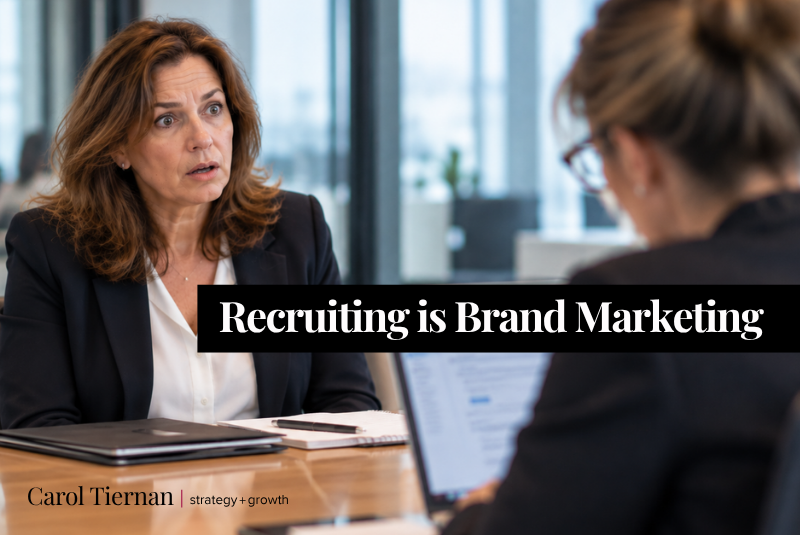
Recruiting is brand marketing
After one particularly strange recruiting interaction, I started thinking about what gets lost when recruiting is treated as a transaction instead of part of the brand.

Everything, all at once
Marketing is expected to be strategic and responsive at the same time, which in practice often turns into everything everywhere all at once. When priorities aren't clear and tradeoffs aren't owned, the work expands, the team stays busy, and real impact gets harder to achieve.

The problem with marketing
Most companies say marketing is critical. Very few can consistently define what it actually is. When leaders don't define a function clearly, they don't just create confusion—they create instability. Here's why marketing keeps getting this treatment, and what it costs.
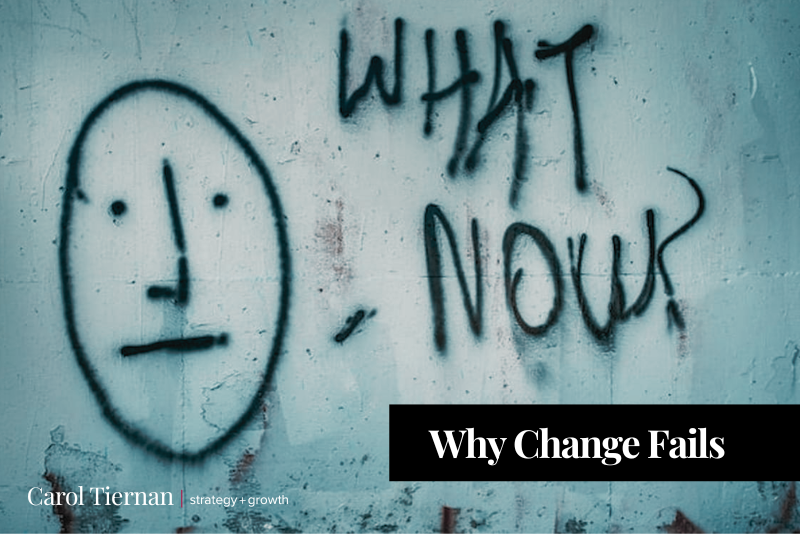
Why change fails
Companies talk about transformation constantly. They use the right language, hire for it, frame it as strategy. But when the work starts exposing how the organization actually operates—who owns what, where the handoffs break—you find out quickly whether the mandate was real.
No growth without change
Most companies aren't hiring for marketing leaders right now. They're hiring for the appearance of one. They want performance without authority, outcomes without decisions, and transformation without discomfort. This post names the paradox—and what to do if you're in it.
The post-experience trap
I've recently started reporting to a manager twenty years younger than me. It works beautifully. But I stumbled into a conversation where a leader defended hiring without regard for experience—and what she described wasn't creativity. It was compliance. Here's why that argument is wrong.
What am I growing?
I read Moral Ambition and haven't been able to shake it. I've spent decades helping companies grow—some whose missions I believed in, some I took for the salary. After more than a year out of full-time work, I'm asking a question I used to avoid: what am I growing, and why?

Get out of the way!
We called it swooping and pooping—when an executive flies into a meeting at the last minute, questions every decision, throws out uninformed directions, and leaves before the consequences land. It kills momentum, demoralizes teams, and erodes trust. Here's what high-performing teams actually need from leadership.
Leadership vs. control
In high-pressure environments, control can feel like leadership. It took therapy, meditation, and watching how my energy affected my son to recognize the pattern for what it was: not responsibility—fear. Here's what changed when I finally let go.

The cost of taking a stand
A CEO ruled through fear. When a campaign failed due to an IT error, he demanded immediate retribution. My team member had done nothing wrong. My boss told me to sacrifice her to show loyalty. I told him he could fire me instead. Here's what that cost—and why I have no regrets.

Leadership = Influence + Accountability
My son was disrupting class and the whole group was following his lead. When I pushed him to apologize publicly—not just to the teacher but to his classmates—he wanted to soften it. That instinct is one most leaders share. And it's exactly the wrong one.

A leadership power trip
Federal employees received a directive to email five weekly tasks to managers or be considered resigned. It's being called accountability. What it actually is: a power trip that confuses surveillance with leadership, and compliance with performance.

The danger of gut instinct hiring
Every day, I hear from job seekers who run into opaque hiring processes and unclear expectations. And every day, I see hiring managers unknowingly reinforcing the problem. Here are three patterns I see that unintentionally screen out the best candidates.

Owning my leadership
I thought I was a bold leader until a leadership assessment said otherwise. My first instinct was to dismiss it. But the more I looked at the role I was in at the time—and how small I was playing it—the more I understood what I had missed.

Leadership wake-up call
Some leadership lessons come from books. Some from experience. And some come from a seven-year-old calling you out on your bad attitude. I found an old leadership assessment from 2018. It was eerily accurate. And it took years to finally take it seriously.

A warning to CEOs
The murder of a CEO is a tragic and grim moment that should serve as a wake-up call—not about security, but about trust. For a generation that grew up watching corporations get bailed out while ordinary people bore the consequences, the discontent is not surprising. It is earned.

Do we trust women leaders?
The election results are still fresh, and I'm sitting with something uncomfortable: a deeply qualified woman lost to a man with a deeply flawed record. This isn't just a political story. It's a workplace story. And we haven't moved the needle nearly as far as we thought.

The evolution of leadership
Leadership has changed profoundly in the last 30 years. I started my career when empathy would have raised eyebrows. Today, it's the expectation. Gen Z has accelerated this—but the shift started with Emotional Intelligence, and it's not reversing.

The power of “I don’t know”
One of the most powerful things a leader can say is 'I don't know.' Not because it signals weakness, but because it opens the door to the collective intelligence of your team. The leaders who get this build something most never do: genuine trust.

Not aspiring to be humble
Bold women are still called too direct, too assertive, too much. In my tech days, I watched talented women get pushed aside for not fitting the culture. We're overdue for workplaces that value women for their strengths—not their ability to shrink.
Clarity is not just a communication skill. It is a leadership responsibility. Leaders who do not create clarity cannot expect alignment, focus, or consistent results. They can only expect more noise.